Türkiye
Things to do in Şanlıurfa
18 places18 stories2 routes
Sightlore has 18 places to explore in Şanlıurfa, and 18 of them come with a 60-second story in 5 languages. Point your camera at a landmark to learn its name and story, and earn points and badges at the places you actually visit.
Şanlıurfa's must-sees
The city's most important places. In the app you see how many you've visited and earn a badge when you've seen them all.
- 1

Balıklıgöl
Balıklıgöl (or Pool of Abraham, Halil-Ür Rahman Lake), is a pool in the southwest of the city center of Şanlıurfa, Turkey known in Jewish and Islamic legends as the place where Nimrod threw Abraham into a fire.
- 2

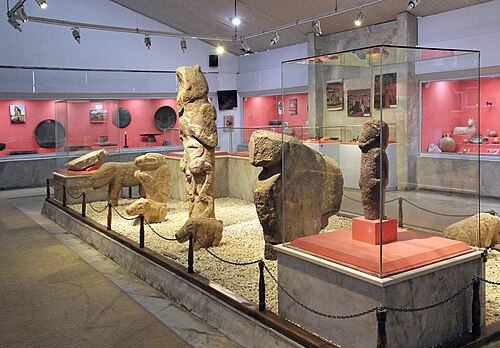
Şanlıurfa Archaeology and Mosaic Museum
Şanlıurfa Archaeology and Mosaic Museums or Şanlıurfa Museum are located in the south-eastern city of Şanlıurfa (also known as Urfa), Turkey.
- 3

Göbekli Tepe
Göbekli Tepe is a Neolithic archaeological site in Upper Mesopotamia (al-Jazira) in modern-day Turkey. The settlement was inhabited from around 9500 BCE to at least 8000 BCE, during the Pre-Pottery Neolithic.
Read its story → - 4

Karahan Tepe
Karahan Tepe is a Pre-Pottery Neolithic archaeological site in Şanlıurfa, Turkey.
- 5

Ulu Camii
The 12th-century Grand Mosque of Urfa is a congregational mosque in Urfa, Turkey. It was probably built on the site of an earlier Christian church, in this case possibly one dedicated to St. Stephen.
- 6

Şanlıurfa Castle
Şanlıurfa Castle, or Urfa Castle in short, is a castle overlooking the city center of Şanlıurfa (previously Edessa), Turkey. The castle was built by the Osroene in antiquity and the current walls were constructed by the Abbasids in 814 AD.
- 7

Carrhae
Harran is a city mentioned in the Hebrew Bible, whose ruins might be in the city of Harran, which lie within present-day Turkey.
- 8

Haleplibahçe Mosaic Museum
The Haleplibahçe Mosaic Museum protects Roman villa mosaics found on site, including the famous Amazon queens and Achilles mosaics, next to the Şanlıurfa Archaeology Museum.
Discovery routes in Şanlıurfa
Visit the stops in any order and tap "Check in" at each one; finish the route to earn points and its own badge.
Balıklıgöl and Old Urfa
A walk from the Archaeology and Haleplibahçe Mosaic museums to Balıklıgöl with its sacred fish, Urfa Castle and the Great Mosque.
The Stone Hills
A drive 12,000 years back in time: the megaliths of Göbeklitepe and Karahantepe, then the beehive houses of Harran.
Places to visit
Historic sites
Balıklıgöl
Balıklıgöl (or Pool of Abraham, Halil-Ür Rahman Lake), is a pool in the southwest of the city center of Şanlıurfa, Turkey known in Jewish and Islamic legends as the place where Nimrod threw Abraham into a fire.
Şanlıurfa Castle
Şanlıurfa Castle, or Urfa Castle in short, is a castle overlooking the city center of Şanlıurfa (previously Edessa), Turkey. The castle was built by the Osroene in antiquity and the current walls were constructed by the Abbasids in 814 AD.
Göbekli Tepe
Göbekli Tepe is a Neolithic archaeological site in Upper Mesopotamia (al-Jazira) in modern-day Turkey. The settlement was inhabited from around 9500 BCE to at least 8000 BCE, during the Pre-Pottery Neolithic.
Karahan Tepe
Karahan Tepe is a Pre-Pottery Neolithic archaeological site in Şanlıurfa, Turkey.
Carrhae
Harran is a city mentioned in the Hebrew Bible, whose ruins might be in the city of Harran, which lie within present-day Turkey.

Apamea on the Euphrates
Apamea or Apameia was a Hellenistic city on the left (viz., the eastern) bank of the Euphrates, opposite the famous city of Zeugma, at the end of a bridge of boats connecting the two, founded by Seleucus I Nicator (Pliny, v. 21).

Birecik Kalesi
Birecik Castle stands on a white limestone hill above the Euphrates, which is why it is also called the White Castle.

Birecik Bridge
The Birecik Bridge is a 695 m (2,280 ft) long deck arch bridge carrying the D.400 across the Euphrates in Birecik, Turkey.

Hacınebi mound
Hacınebi is a mound 5 km north of Birecik on a bend of the Euphrates. Excavations revealed a settlement with links to Uruk-period Mesopotamia in the 4th millennium BC.

Halfeti
Halfeti is a historic town on the Euphrates, partly submerged by the Birecik Dam reservoir. Boat trips visit the sunken houses and Rumkale; it is famous for its black rose.

Harbetsuvan Tepesi
Harbetsuvan Tepesi is a Neolithic site in Eyyübiye with T-shaped pillars like those of Göbeklitepe, part of the Taş Tepeler (Stone Hills) project.

Sayburç site
Sayburç is a Pre-Pottery Neolithic A (9th millennium BCE) archaeological site in Şanlıurfa, Turkey. The site is in the same geographical region as Göbekli Tepe.

Sefer Tepe
Sefer Tepe is a Pre-Pottery Neolithic A archaeological site in the Urfa region of Turkey. It participates to the T-shaped pillar tradition seen at Göbekli Tepe. It is part of the Taş Tepeler culture.

Sumatar Harabesi
Sumatar Harabesi (also, Sumatar Ruins or simply, Sumatar or Soğmatar) was an ancient watering place for semi-nomadic peoples located in the Tektek Mountains, 60 kilometers (37 mi) southeast of Urfa (Edessa, Mesopotamia) and 40 kilometers (25 mi) northeast of Harran, in…

Sultantepe
Sultantepe (Huzirina?), a tell with a temple complex from the Late Assyrian, an archeological site at the edge of the Neo-Assyrian Empire, now in Şanlıurfa Province, Turkey.
Museums
Şanlıurfa Archaeology and Mosaic Museum
Şanlıurfa Archaeology and Mosaic Museums or Şanlıurfa Museum are located in the south-eastern city of Şanlıurfa (also known as Urfa), Turkey.
Haleplibahçe Mosaic Museum
The Haleplibahçe Mosaic Museum protects Roman villa mosaics found on site, including the famous Amazon queens and Achilles mosaics, next to the Şanlıurfa Archaeology Museum.
Places of worship
Ulu Camii
The 12th-century Grand Mosque of Urfa is a congregational mosque in Urfa, Turkey. It was probably built on the site of an earlier Christian church, in this case possibly one dedicated to St. Stephen.
Explore Şanlıurfa with your camera
Hear the stories on the spot, complete routes, collect badges. Sightlore is coming soon to the App Store.