Egypt
Things to do in Luxor
16 places16 stories2 routes
Sightlore has 16 places to explore in Luxor, and 16 of them come with a 60-second story in 5 languages. Point your camera at a landmark to learn its name and story, and earn points and badges at the places you actually visit.
Luxor's must-sees
The city's most important places. In the app you see how many you've visited and earn a badge when you've seen them all.
- 1

Tomb of Tutankhamun
The tomb of Tutankhamun, a pharaoh of the Eighteenth Dynasty of ancient Egypt, is located in the Valley of the Kings. The tomb, also known by its tomb number KV62, consists of four chambers and an entrance staircase and corridor.
- 2

Valley of the Kings
The Valley of the Kings, also known as the Valley of the Gates of the Kings, is an area in Egypt where, for a period of nearly 500 years from the Eighteenth Dynasty to the Twentieth Dynasty, rock-cut tombs were excavated for pharaohs and powerful nobles under the New Kingdom…
Read its story → - 3

Medinet Habu
Medinet Habu is an archaeological locality situated near the foot of the Theban Hills on the West Bank of the River Nile opposite the modern city of Luxor, Egypt.
- 4

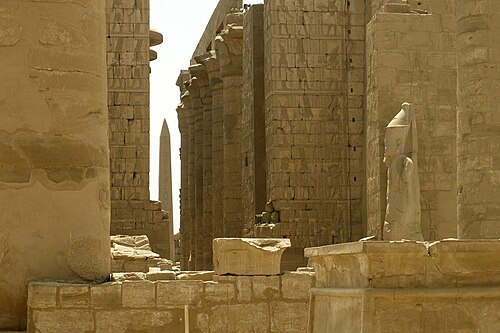
Karnak Temple Complex
The Karnak Temple Complex, commonly known as Karnak, comprises a vast mix of temples, pylons, chapels, and other buildings near Luxor, Egypt.
- 5

Ramesseum
The Ramesseum is the memorial temple (or mortuary temple) of Pharaoh Ramesses II ("Ramesses the Great"). It is located in the Theban Necropolis in Upper Egypt, on the west of the River Nile, across from the modern city of Luxor.
- 6

Valley of the Queens
The Valley of the Queens is a site in Egypt, in which queens, princes, princesses, and other high-ranking officials were buried from roughly 1560 BC to 1130 BC. Pharaohs were buried in the Valley of the Kings.
- 7

Mortuary temple of Hatshepsut
The mortuary temple of Hatshepsut was built during the reign of Pharaoh Hatshepsut of the Eighteenth Dynasty of Egypt. Located opposite the city of Luxor, it is considered to be a masterpiece of ancient architecture.
- 8

Deir el-Medina
Deir el-Medina, or Dayr al-Madīnah, is an ancient Egyptian workmen's village which was home to the artisans who worked on the tombs in the Valley of the Kings during the 18th to 20th Dynasties of the New Kingdom of Egypt.
- 9

Luxor Museum
Luxor Museum is an archaeological museum in Luxor, Egypt. It stands on the corniche, overlooking the east bank of the River Nile.
- 10

Colossi of Memnon
The Colossi of Memnon are two large stone statues of the Pharaoh Amenhotep III, which stand at the front of the ruined Mortuary Temple of Amenhotep III, the largest temple in the Theban Necropolis.
Discovery routes in Luxor
Visit the stops in any order and tap "Check in" at each one; finish the route to earn points and its own badge.
Luxor: from Karnak to Luxor Temple
From the Karnak Temple Complex along the Avenue of Sphinxes to the Luxor Museum and the Mummification Museum; Luxor Temple and the Abu Haggag Mosque.
Luxor West Bank: Valley of the Kings and Hatshepsut
From the Colossi of Memnon to Medinet Habu, the Valley of the Queens and Deir el-Medina; the Ramesseum and the Mortuary Temple of Hatshepsut; in the Valley of the Kings, the tomb of Tutankhamun and KV9; finally the Mortuary Temple of Seti I.
Places to visit
Historic sites
Karnak Temple Complex
The Karnak Temple Complex, commonly known as Karnak, comprises a vast mix of temples, pylons, chapels, and other buildings near Luxor, Egypt.

The King’s Festivities Road
Avenue of Sphinxes or The King's Festivities Road, also known as Rams Road, is a 2.7 km (1.7 mi) long avenue (dromos) which connects Karnak Temple with Luxor Temple having been uncovered in the ancient city of Thebes (modern Luxor), with sphinxes and ram-headed statues lined…

Luxor Temple
The Luxor Temple is a large Ancient Egyptian temple complex located on the east bank of the Nile River in the city of Luxor (ancient Thebes) and was constructed around 1400 BC.
Medinet Habu
Medinet Habu is an archaeological locality situated near the foot of the Theban Hills on the West Bank of the River Nile opposite the modern city of Luxor, Egypt.
Valley of the Queens
The Valley of the Queens is a site in Egypt, in which queens, princes, princesses, and other high-ranking officials were buried from roughly 1560 BC to 1130 BC. Pharaohs were buried in the Valley of the Kings.
Deir el-Medina
Deir el-Medina, or Dayr al-Madīnah, is an ancient Egyptian workmen's village which was home to the artisans who worked on the tombs in the Valley of the Kings during the 18th to 20th Dynasties of the New Kingdom of Egypt.
Ramesseum
The Ramesseum is the memorial temple (or mortuary temple) of Pharaoh Ramesses II ("Ramesses the Great"). It is located in the Theban Necropolis in Upper Egypt, on the west of the River Nile, across from the modern city of Luxor.
Mortuary temple of Hatshepsut
The mortuary temple of Hatshepsut was built during the reign of Pharaoh Hatshepsut of the Eighteenth Dynasty of Egypt. Located opposite the city of Luxor, it is considered to be a masterpiece of ancient architecture.
Valley of the Kings
The Valley of the Kings, also known as the Valley of the Gates of the Kings, is an area in Egypt where, for a period of nearly 500 years from the Eighteenth Dynasty to the Twentieth Dynasty, rock-cut tombs were excavated for pharaohs and powerful nobles under the New Kingdom…
Tomb of Tutankhamun
The tomb of Tutankhamun, a pharaoh of the Eighteenth Dynasty of ancient Egypt, is located in the Valley of the Kings. The tomb, also known by its tomb number KV62, consists of four chambers and an entrance staircase and corridor.

KV9
Tomb KV9 in Egypt's Valley of the Kings was originally constructed by Pharaoh Ramesses V. He was interred here, but his uncle, Ramesses VI, later reused the tomb as his own.

Mortuary Temple of Seti I
The Mortuary Temple of Seti I is the memorial temple (or mortuary temple) of the New Kingdom Pharaoh Seti I. It is located in the Theban Necropolis in Upper Egypt, across the River Nile from the modern city of Luxor (Thebes).
Museums
Luxor Museum
Luxor Museum is an archaeological museum in Luxor, Egypt. It stands on the corniche, overlooking the east bank of the River Nile.
Mummification Museum
The Mummification Museum is an archaeological museum in Luxor, Upper Egypt. It is dedicated to the art of Ancient Egyptian mummification.
Places of worship

Abu Haggag Mosque
The Abu Haggag Mosque is a mosque in Luxor, in the Luxor Governorate of Egypt. The mosque contains the tomb of Sheikh Yusuf Abu al-Haggag, after whom the mosque is named.
Monuments
Colossi of Memnon
The Colossi of Memnon are two large stone statues of the Pharaoh Amenhotep III, which stand at the front of the ruined Mortuary Temple of Amenhotep III, the largest temple in the Theban Necropolis.
Explore Luxor with your camera
Hear the stories on the spot, complete routes, collect badges. Sightlore is coming soon to the App Store.