Iceland
Things to do in Akureyri & Mývatn
16 places12 stories3 routes
Sightlore has 16 places to explore in Akureyri & Mývatn, and 12 of them come with a 60-second story in 5 languages. Point your camera at a landmark to learn its name and story, and earn points and badges at the places you actually visit.
Akureyri & Mývatn's must-sees
The city's most important places. In the app you see how many you've visited and earn a badge when you've seen them all.
- 1

Hverfjall
Hverfjall is a tephra cone or tuff ring volcano in northern Iceland, to the east of Mývatn. It erupted in 2500 BP in the southern part of the Krafla fissure swarm. The crater is approximately 1 km in diameter.
- 2

Ásbyrgi
Ásbyrgi is a glacial canyon and forest in the north of Iceland, located approximately 38 kilometres (24 mi) east of Húsavík on the Diamond Circle road.
- 3

Akureyri Botanical Garden
The Akureyri Botanical Garden is a unique and significant botanical garden located in the southern part of Akureyri, a city in Northern Iceland.
- 4

Námafjall
A 482-metre ridge in the Mývatn area; an active volcano belonging to the Krafla system, surrounded by a high-temperature geothermal field.
- 5

Dettifoss
Dettifoss is a waterfall in Vatnajökull National Park in Northeast Iceland, and is reputed to be the second most powerful waterfall in Europe after the Rhine Falls.
Read its story → - 6

Grjótagjá
Grjótagjá is a small lava cave near lake Mývatn in Iceland. It has a thermal spring inside. In early 18th century the outlaw Jón Markússon lived there and used the cave for bathing.
- 7

Goðafoss
Goðafoss is a waterfall in northern Iceland. It is located along the country's main ring road at the junction with the Sprengisandur highland road, about 45 minutes from Akureyri.
- 8

Akureyrarkirkja
Akureyrarkirkja or The Church of Akureyri is a prominent Lutheran church at Akureyri in northern Iceland.
- 9

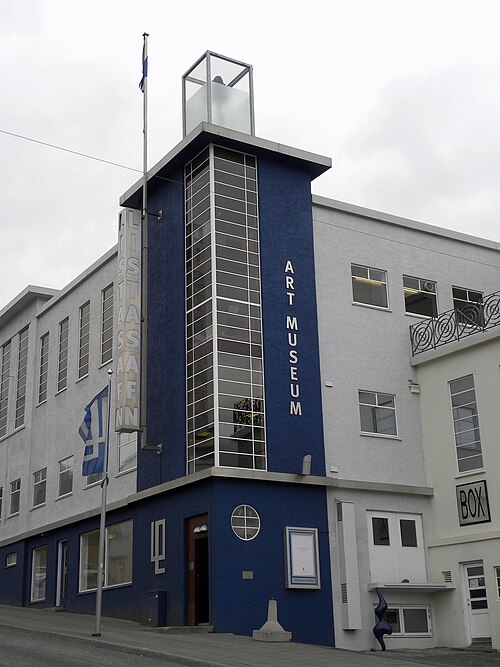
Akureyri Art Museum
The Akureyri Art Museum was founded in 1993. The museum is located in the center of Akureyri, the second-largest city in Iceland.
- 10

Akureyri Museum
The regional and local history museum of the Eyjafjörður area, opened on 17 July 1963 at Aðalstræti 58 in Akureyri.
Discovery routes in Akureyri & Mývatn
Visit the stops in any order and tap "Check in" at each one; finish the route to earn points and its own badge.
Akureyri: church, museums and botanical garden
A short walk from the Akureyri Art Museum to Akureyri Church, the Botanical Garden and the Akureyri Museum.
Goðafoss and Lake Mývatn
From the Goðafoss waterfall to the Skútustaðir craters by Lake Mývatn, the Dimmuborgir lava field, the Hverfjall volcano, the Grjótagjá cave and the Mývatn Nature Baths.
From Námafjall and Krafla to Dettifoss and Ásbyrgi
From Námafjall mountain to the Víti crater lake and the Krafla volcano, then on to the Dettifoss waterfall and the Ásbyrgi canyon.
Places to visit
Museums
Akureyri Art Museum
The Akureyri Art Museum was founded in 1993. The museum is located in the center of Akureyri, the second-largest city in Iceland.
Akureyri Museum
The regional and local history museum of the Eyjafjörður area, opened on 17 July 1963 at Aðalstræti 58 in Akureyri.
Places of worship
Akureyrarkirkja
Akureyrarkirkja or The Church of Akureyri is a prominent Lutheran church at Akureyri in northern Iceland.
Nature
Akureyri Botanical Garden
The Akureyri Botanical Garden is a unique and significant botanical garden located in the southern part of Akureyri, a city in Northern Iceland.
Goðafoss
Goðafoss is a waterfall in northern Iceland. It is located along the country's main ring road at the junction with the Sprengisandur highland road, about 45 minutes from Akureyri.

Skútustaðagígar
Volcanic craters on the southern shore of Lake Mývatn, near Skútustaðir.

Dimmuborgir
Dimmuborgir is a large area of unusually shaped lava fields east of Mývatn in Iceland. The Dimmuborgir area is composed of various volcanic caves and rock formations, reminiscent of an ancient collapsed citadel (hence the name).
Hverfjall
Hverfjall is a tephra cone or tuff ring volcano in northern Iceland, to the east of Mývatn. It erupted in 2500 BP in the southern part of the Krafla fissure swarm. The crater is approximately 1 km in diameter.
Grjótagjá
Grjótagjá is a small lava cave near lake Mývatn in Iceland. It has a thermal spring inside. In early 18th century the outlaw Jón Markússon lived there and used the cave for bathing.

Myvatn Nature Baths
Open-air hot springs baths near Lake Mývatn, west of Námafjall, fed by geothermal water.
Námafjall
A 482-metre ridge in the Mývatn area; an active volcano belonging to the Krafla system, surrounded by a high-temperature geothermal field.

Víti Krafla
A crater lake (maar) at the Krafla volcano; its name means "hell", and it formed in a steam explosion in 1724.

Krafla
Krafla is a volcanic caldera of about 10 km (6.2 mi) in diameter with a 90 km (56 mi) long fissure zone.
Dettifoss
Dettifoss is a waterfall in Vatnajökull National Park in Northeast Iceland, and is reputed to be the second most powerful waterfall in Europe after the Rhine Falls.
Ásbyrgi
Ásbyrgi is a glacial canyon and forest in the north of Iceland, located approximately 38 kilometres (24 mi) east of Húsavík on the Diamond Circle road.

Mývatn
Mývatn is a shallow lake situated in an area of active volcanism in the north of Iceland, near Krafla volcano. It has a high amount of biological activity.
Explore Akureyri & Mývatn with your camera
Hear the stories on the spot, complete routes, collect badges. Sightlore is coming soon to the App Store.